
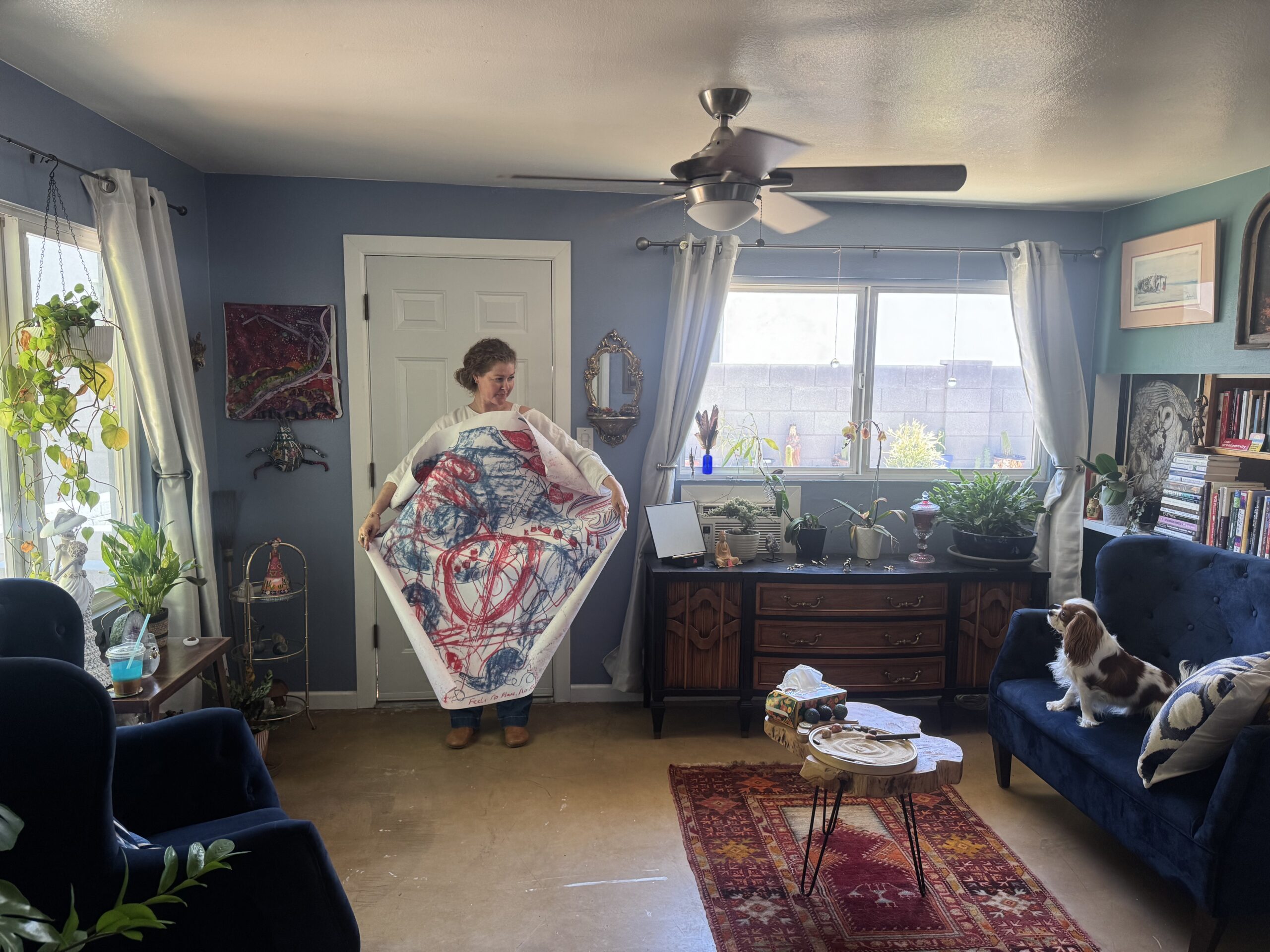
A picture of a pup helping with expressive arts practices in The Nest. That’s what I call the healing center. It is a safe space to land, be nourished, and launch from. The property is also home to a pair of hawks that bring a special birds-eye insight into the therapeutic practice.
What if we approached our therapy practice more like a nourishing relationship with ourselves instead of just a laborious journey of constant fixing? I see a lot of folks get over-attached and over-identified with ‘the work’. Folks in their ambitious quest for healing move through a multitude of modalities, fixing, fixing, fixing, reaching for the next step but never fully landing where they are.
I also see folks who are so overwhelmed with the day-to-day circumstances of their life that the idea of committing to a deep therapeutic process seems unrealistic and unreachable. “If I start crying, I am afraid it will never stop.” “I don’t have the time or energy to open Pandora’s box while I am working three jobs and single parenting.”
Therapy doesn’t always have to be hard; sometimes it is more about growing yourself than fixing yourself. It’s about learning or reimagining who you are, meeting yourself in new ways. It is a mentorship, dare I say companionship, with yourself and a safe person in a safe and exploratory space.
Sometimes my clients come in and we titrate into a trauma vortex and touch the most tender parts of the soul with the courage to face the past, other times we lean into the richness of life as it unfolds in the moment and we do art, eco-therapy (mindfuln time in nature), breathing and guided meditation, existential contemplation, all sorts of fun woo-woo, Jungian, metaphorical work, and loads of somatic interventions. These are modalities that express without too much talk or over-identification with the past, modalities that cultivate a positive and empowering connection to self in the presence.
Clearly, at some point, clinical therapy needs a psychoanalytical and evidence-based structure that helps dismantle and reorganize the past safely and effectively. However, there is equal, if not more, benefit in growing the self in the here and now. A holistic approach leaves room for contemplation, wisdom-rooted and philosophical practices, expressive arts, stabilizing biological basics of good health habits, and building a window of tolerance for presence. Good trauma work is about knowing when to look back and when to face forward.
It is okay to take breaks from the deep analytical process of untangling our past.
The point of surviving the past is to honor our aliveness now.
After we clean and dress a wound, we have to leave it alone to let it heal.
With love,
Robin